
 7.2
Movie
Acting
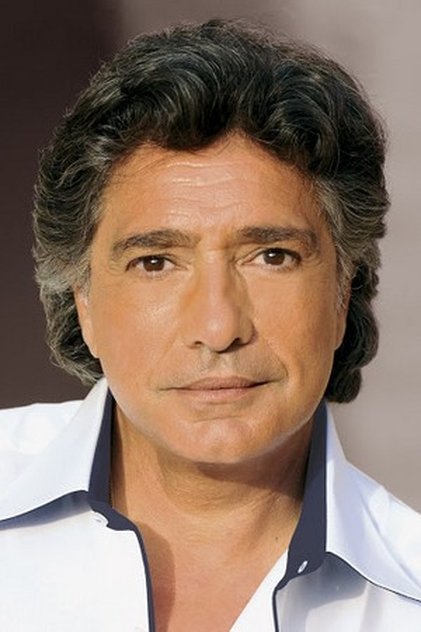
Frédéric François
- Born
- (age 76)
- Birthplace
- Lercara Friddi, Sicily, Italy
- Credits
- 26 titles
Biography
Frédéric François (born Francesco Barracato; 3 June 1950 in Lercara Friddi, Sicily, Italy), is a French-speaking singer-composer living in Belgium.
Born on 3 June 1950 in Lercara Friddi in Sicily, in a very modest Italian family, he is the second child of Antonina (Nina) Salemi and Giuseppe (Peppino) Barracato. His mother was a seamstress in Lercara and his father was initially a miner in a sulphur mine in Lercara. He emigrated to Belgium in the coal basin of Liège, where he signed a three-year contract as a miner. In 1951, Nina and her two sons joined Giuseppe in Tilleur in a Red Cross Convoy. Francesco Barracato grew up in a family of eight children. Peppino used to sing Neapolitan songs and opera arias for pleasure and accompanied himself on the guitar. Young Francesco was only 10 when he sang O Sole Mio for the first time in public in a café frequented mostly by Sicilians in Tilleur, "Le Passage à Niveau" [The Level Crossing].
In 1963, he turned semi-professional as a singer-guitarist in a group called "Les Eperviers" [The Sparrow hawks]. He left the technical college in 1965 for the Liège conservatoire to study violin, where he took courses particularly in diction, declamation and voice.
In 1966, he joined a new group called "Les Tigres Sauvages" [Wild Tigers] and won the "Microsillon d'Argent" [Silver Microgroove Record] at the Festival of Châtelet in Belgium – a prize that included the recording of a single. He recorded two titles: “Petite fille” [Little Girl] and "”Ne pleure pas" [Don't cry], under the pseudonym of François Bara. His father bought the 500 records that were pressed and managed to sell them for jukeboxes. The winner also got to perform as a warm-up act for three confirmed artists: Johnny Hallyday, Pascal Danel and Michel Polnareff, his idol.
In 1969, his meeting with the Belgian producer Constant Defourny led to his first contract with a record company: Barclay-Belgique. He recorded “Sylvie” in July 1969, and released his first single under the name of Frédéric François, in homage to the composer Chopin, whose real first name was Frédéric-François. He gave his first performances as a solo artist in venues in the Liège region during the tour of The Best Group orchestra: he performed five of his own compositions, including Sylvie, of course. He released a new single, “Les Orgues de Saint Michel” [The Organ of Saint Michael], which was not at all successful, then another one, "Marian," accompanied by a second title "Comme tous les amoureux," [Like all people in love], which was written especially to represent Belgium at the Eurovision contest in 1970, but was not selected. ...
Source: Article "Frédéric François" from Wikipedia in English, licensed under CC-BY-SA.
Signature work
Known For
Acting credits 26
| Year | Title | Role |
|---|---|---|
| 2022 | Il était une fois Champs-Élysées TV | Self (archive footage) (1 ep) |
| 2022 | The Unexpected Getaway TV | Self (1 ep) |
| 2022 | Ces chansons de nos vacances Film | Self |
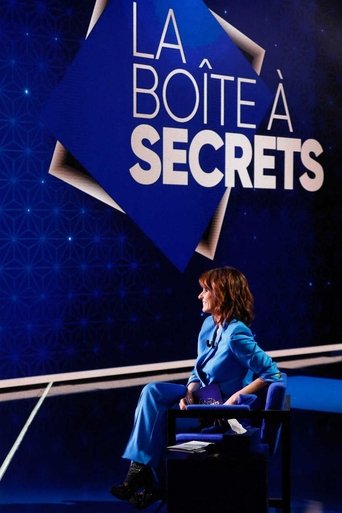
| 2019 | La Boîte à secrets TV | (1 ep) |
| 2016 | Amanda TV | Self (1 ep) |
| 2014 | Les Enfoirés - Les Enfoirés en chœur de 1985 à aujourd'hui Film | |
| 2006 | Les années bonheur TV | Self (1 ep) |
| 2001 | Star Academy TV | Self (1 ep) |
| 2001 | The Apartment TV | (1 ep) |
| 2001 | Stars à domicile TV | Self (1 ep) |
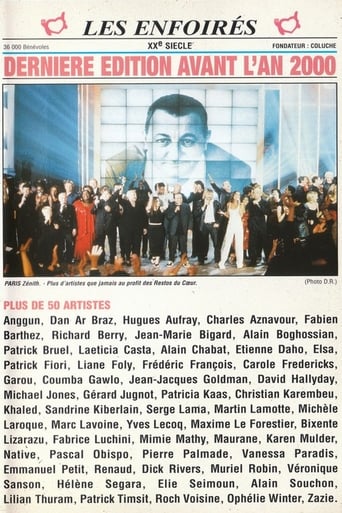
| 1999 | Les Enfoirés 1999 - Dernière édition avant l'an 2000 Film | |
| 1998 | Vivement dimanche TV | Self (1 ep) |
| 1990 | Stars 90 TV | Self (1 ep) |
| 1987 | Téléthon TV | Self (3 ep) |
| 1987 | Le monde est à vous TV | Self (26 ep) |
| 1987 | Sacrée soirée TV | Self (21 ep) |
| 1984 | La Chance aux chansons TV | Self, Self (archive footage) (13 ep) |
| 1982 | Champs-Elysées TV | Self (6 ep) |
| 1977 | Fan School TV | Self (23 ep) |
| 1976 | Les Jeux de 20 heures TV | Self (1 ep) |
| 1975 | Système 2 TV | Self (3 ep) |
| 1975 | Les Rendez-vous du dimanche TV | Self (1 ep) |
| 1975 | Midi Première TV | Self (5 ep) |
| 1972 | Midi trente TV | Self (5 ep) |
| 1971 | Cadet Rousselle TV | Self (2 ep) |
| 1971 | Samedi soir TV | Self (1 ep) |