
 6.6
Movie

Acting
Agnes de Mille
- Born
- Died
- (aged 88)
- Birthplace
- New York City, New York, USA
- Credits
- 21 titles
Biography
From Wikipedia
Agnes George de Mille (September 18, 1905 – October 7, 1993) was an American dancer and choreographer.
De Mille began her association with the fledgling American Ballet Theatre (then called the Ballet Theatre) in 1939, but her first significant work, Rodeo (1942) with the score by Aaron Copland, was staged for the Ballet Russe de Monte Carlo. Although de Mille continued to choreograph nearly up to the time of her death—her final ballet, The Other, was completed in 1992—most of her later works have dropped out of the ballet repertoire. Besides Rodeo, two other de Mille ballets are performed on a regular basis, Three Virgins and a Devil (1934) adapted from a tale by Giovanni Boccaccio, and Fall River Legend (1948) based on the life of Lizzie Borden.
On the strength of Rodeo, de Mille was hired to choreograph the musical show Oklahoma! (1943). The dream ballet, in which dancers Marc Platt, Katherine Sergava, and George Church doubled for the leading actors, successfully integrated dance into the musical's plot. Instead of functioning as an interlude or divertissement, the ballet provided key insights into the heroine's emotional troubles. De Mille went on to choreograph over a dozen other musicals, most notably Bloomer Girl (1944), Carousel (1945), Brigadoon (1947), Gentlemen Prefer Blondes (1949), Paint Your Wagon (1951), The Girl in Pink Tights (1954), Goldilocks (1957), and 110 in the Shade (1963).
De Mille's success on Broadway did not translate into success in Hollywood. Her only significant film credit is Oklahoma! (1955). She was not invited to recreate her choreography for either Brigadoon or Carousel. Nevertheless, her two specials for the TV series Omnibus, "The Art of Ballet" and "The Art of Choreography" (both televised in 1956), were immediately recognized as landmark attempts to bring serious dance to the attention of a broad public.
Her love for acting played a very important role in her choreography. De Mille revolutionized musical theatre by creating choreography which not only conveyed the emotional dimensions of the characters but enhanced the plot. Her choreography, as a reflection of her awareness of acting, reflected the angst and turmoil of the characters instead of simply focusing on a dancer's physical technique.
De Mille married Walter Prude on June 14, 1943. They had one child, Jonathan, born in 1946.
Her hobbies included collecting fine porcelain and research on the history of clothes, something at which she was an expert.
She suffered a stroke on stage in 1975, but recovered. She died in 1993 of a second stroke in her Greenwich Village apartment.
Signature work
Known For









Acting credits 13
| Year | Title | Role |
|---|---|---|
| 2016 | The Lost City of Cecil B. DeMille Film | Self |
| 2011 | The Story of Film: An Odyssey TV | Self (1 ep) |
| 1995 | Ballet Film | |
| 1995 | The First 100 Years: A Celebration of American Movies Film | Self |
| 1994 | Martha Graham: The Dancer Revealed Film | Self - Biographer |
| 1987 | Agnes: the Indomitable De Mille Film | Herself/Narrator |
| 1980 | Hollywood TV | Self (5 ep) |
| 1979 | Musical Comedy Tonight Film | |
| 1978 | The Kennedy Center Honors TV | Self (1 ep) |
| 1978 | The South Bank Show TV | (1 ep) |
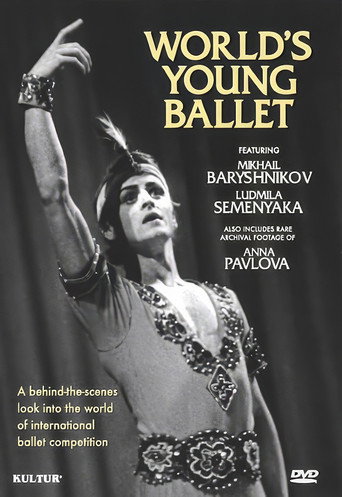
| 1969 | World's Young Ballet Film | |
| 1958 | Small World TV | Self (1 ep) |
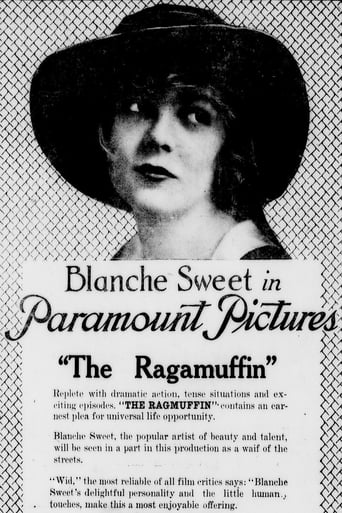
| 1916 | The Ragamuffin Film | Jenny, as a Child |
Crew credits 8
| Year | Title | Job |
|---|---|---|
| 2011 | Oklahoma! Film | Choreographer |
| 1957 | Sebastian Film | Choreographer |
| 1956 | Bloomer Girl Film | Choreographer |
| 1956 | Carousel Film | Choreographer |
| 1955 | Oklahoma! Film | Choreographer |
| 1952 | Omnibus TV | Choreographer (2 ep) |
| 1946 | London Town Film | Choreographer |
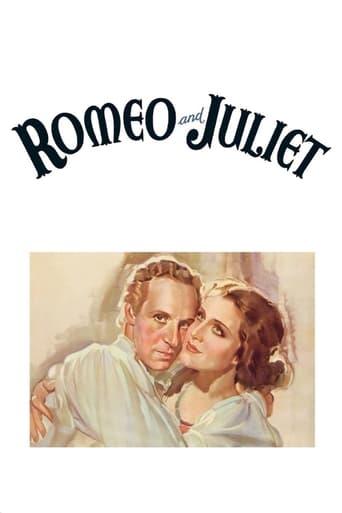
| 1936 | Romeo and Juliet Film | Choreographer |