
 6.5
영화

음향
Γιάννης Μαρκόπουλος
- 출생
- 사망
- (나이 84세)
- 출생지
- Iraklio, Crete, Greece
- 크레딧
- 작품 16개
약력
Yannis Markopoulos (Greek: Γιάννης Μαρκόπουλος; 18 March 1939 – 10 June 2023) was a Greek composer.
In 1956 Markopoulos moved to Athens to further his music studies at the Athens Conservatoire under the composer Yiorgos Sklavos and the violin teacher Joseph Bustidui, while studying philosophy and sociology at the Panteion University. While a student he composed music for the theatre, for the cinema and for dance performances. When he was 24 he was awarded the Music Prize of the International Thessaloniki Film Festival for Nikos Koundouros’ film Young Aphrodites and subsequently his works Theseus (dance-drama), Hiroshima (ballet suite) and Three Dance Sketches were performed by avant-garde dance groups.
In 1967 a military dictatorship was imposed in Greece. Markopoulos left for London, where he enriched his knowledge under the English composer Elizabeth Lutyens, while his acquaintance with the composers Jani Christou and Iannis Xenakis played an important rôle in the deepening of his contact with the most pioneering musical figures.
In London he composed the secular cantata Ilios o Protos (Sun the First) on the poetry of Odysseas Elytis (Nobel Prize 1979) and completed the musical ceremony Idou o Nymphios, a work the composer still wished to keep unreleased with the exception of one part, the song Zavara-Katra-Nemia, a vocal composition of Dionysian character, that was released in 1966 and became one of his best known pieces. In 1969 Markopoulos returned to Athens with a musical vision that would not only change the course of music in Greece but would also lend immediate moral support to the general demand for restoration of democracy, the struggle being led primarily by university students and intellectuals. He founded a new and highly distinctive musical ensemble which included Greek local instruments. Thus the piano was combined with the lyre for the first time, while he also added instruments of his own invention, particularly among the percussion, with the intention of enriching the variety of sounds. He then selected young musicians, singers and actors, from both the city and the provinces, and collaborating with painters and poets he presented a series of performances with his musical works Ilios o Protos (Sun the First), Chroniko (Chronicle), Ithagenia (Nativeland), Thitia (Lifetime), Stratis Thalassinos Among the Agapanthi (poetry by Giorgos Seferis, Nobel Prize 1963), Oropedio (Mountain Plain) at the Lydra venue which he named music-studio.
In 1976 he composed the popular liturgy The Free Besieged, based on the poem by Greece’s national poet Dionysios Solomos, that he conducted in the crowded Panathenean Stadium, and which was presented in London in 1979. In 1977 he composed the music for the BBC television series Who Pays the Ferryman? The musical theme was a hit in Britain and gained the composer international renown. Numerous invitations for concerts abroad followed, in Paris, Berlin, Frankfurt, Munich, Amsterdam, Stockholm, Canada, Russia, Australia and the United States. Markopoulos continued composing music for the theatre and for the cinema, collaborating with directors such as Jules Dassin, George Cosmatos, Nikos Koundouros and Spyros Evaggelatos. Through his work Yannis Markopoulos did much to shape the musical landscape of the 1970s.
대표작
대표작
6.5
영화
 7.3
영화
Ο Φόβος
 6.2
영화
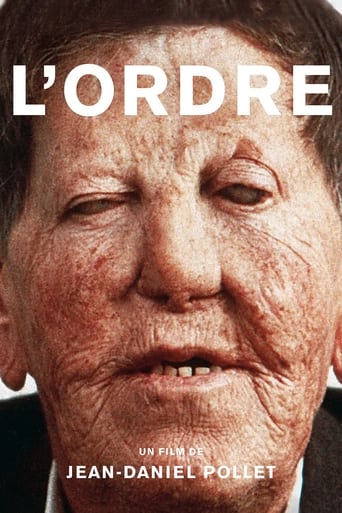
L'Ordre
 4.6
영화
Μπάιρον: Η Μπαλάντα ενός Δαιμονισμένου
 6.3
영화
Το πιθάρι
 6.8
영화
Ντάμα σπαθί
 6.2
영화
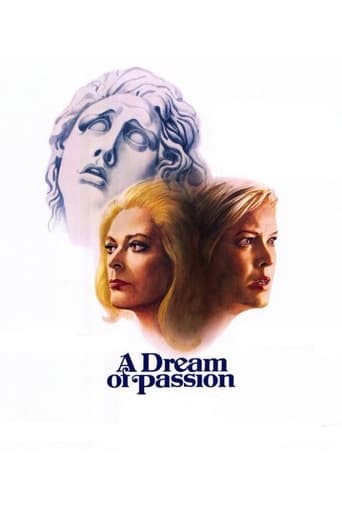
Κραυγή Γυναικών
 6.8
영화
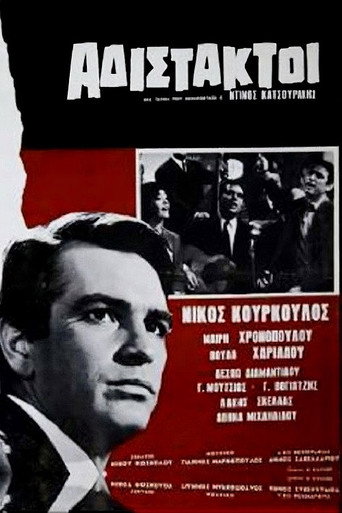
Αδίστακτοι
 5.5
영화
Sin
 6.6
영화
Τραγούδια της φωτιάς
 5.8
영화
Το Παρελθόν Μιας Γυναίκας
 6.3
영화
Τραγωδία του Αιγαίου
 7.0
영화
Ο 13ος
 7.0
영화
Βαρθολομαίος
 영화
Οι ελιές
출연작 2
| 연도 | 제목 | 역할 |
|---|---|---|
| 1976 | Παρασκήνιο TV | Self (1개 에피소드) |
| 1975 | Τραγούδια της φωτιάς 영화 | Self |
제작진 크레딧 15
| 연도 | 제목 | 직책 |
|---|---|---|
| 1992 | Μπάιρον: Η Μπαλάντα ενός Δαιμονισμένου 영화 | Original Music Composer |
| 1978 | Κραυγή Γυναικών 영화 | Music |
| 1975 | Τραγούδια της φωτιάς 영화 | Music, Songs |
| 1973 | Βαρθολομαίος 영화 | Music |
| 1973 | L'Ordre 영화 | Music |
| 1971 | Sin 영화 | Music |
| 1968 | Το Παρελθόν Μιας Γυναίκας 영화 | Music |
| 1967 | Ο 13ος 영화 | Music Editor, Music Arranger |
| 1966 | Ντάμα σπαθί 영화 | Original Music Composer |
| 1966 | Ο Φόβος 영화 | Original Music Composer |
| 1965 | Αδίστακτοι 영화 | Music |
| 1964 | Οι ελιές 영화 | Music Arranger |
| 1963 | 어린 아프로디테 영화 | Music |
| 1962 | Το πιθάρι 영화 | Music |
| 1961 | Τραγωδία του Αιγαίου 영화 | Music |